
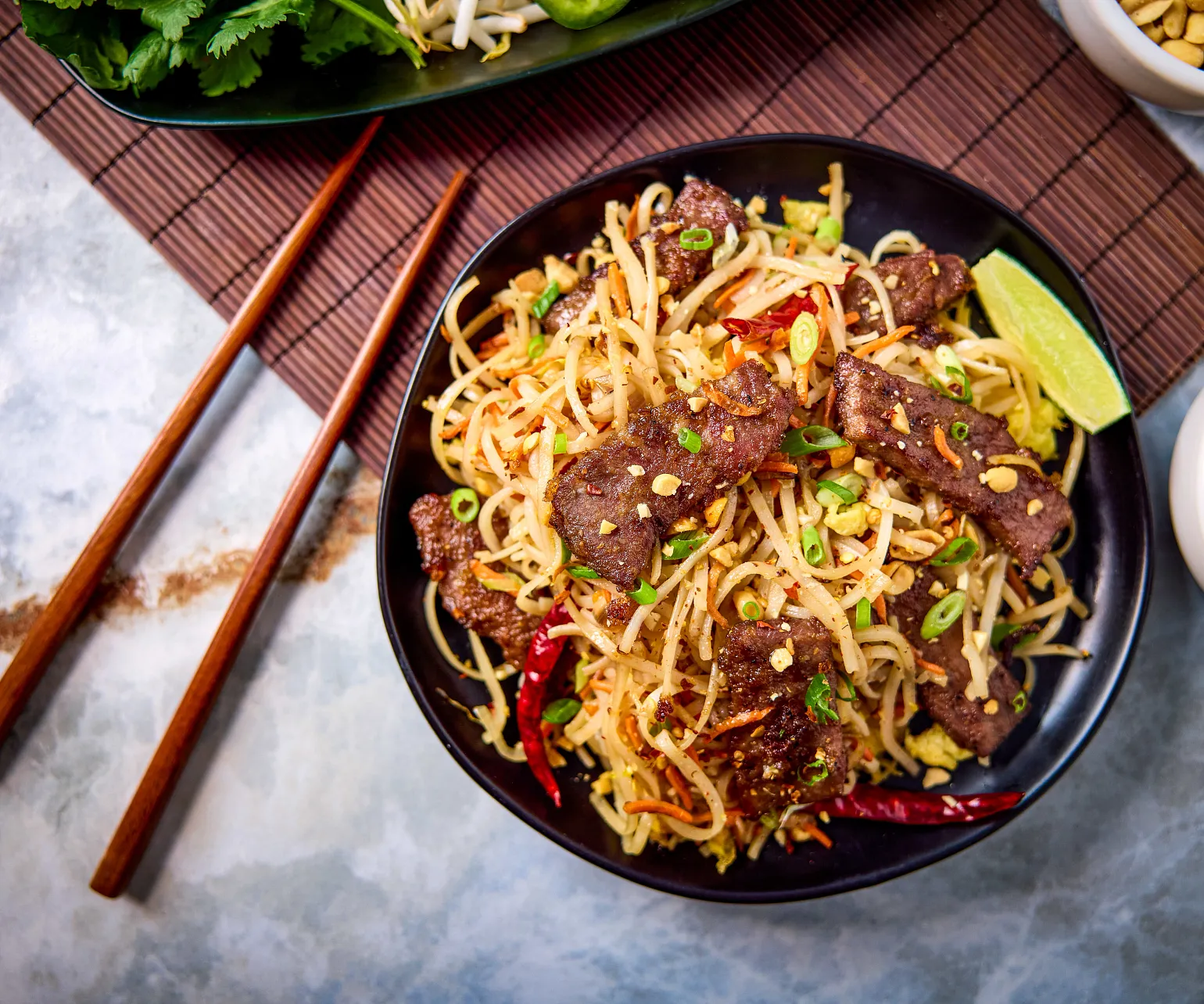
Beef Pad Thai
A popular Thailand street food filled with rice noodles, beef, scrambled eggs, bean sprouts and green onions tossed with a tangy sauce.
Cook Time: 50 Minutes
Servings: 8
Ingredients: 20
Ingredients
Preparation
-
Step 1
Combine soy sauce, hoisin sauce, oyster sauce, brown sugar and fish sauce in medium bowl. Reserve 2 tablespoons; cover, set aside.
-
Step 2
Combine beef, cornstarch, reserved marinade, pepper and baking soda in medium bowl; toss to coat. Cover and marinate in refrigerator 2 hours or overnight.
-
Step 3
Prepare noodles according to package directions; rinse and drain. Set aside.
-
Step 4
Heat 2 tablespoons oil in large nonstick skillet or wok over medium-high heat until hot. Add half of beef; stir-fry 3 to 5 minutes or until internal temperature of 145°F for medium as measured by a meat thermometer. (Do not overcook.) Remove from skillet; keep warm. Repeat with remaining 2 tablespoons oil and beef.
-
Step 5
Add carrots, shallots, garlic and chili flakes. Cook 2 to 3 minutes or until vegetables are tender and garlic is fragrant. Add eggs; cook 30 seconds to 1 minutes or just until cooked through, stirring occasionally. Stir in cooked noodles, beef and sauce mixture; stir-fry 1 to 2 minutes or until heated through. Toss together until everything is cooked and mixed thoroughly.
-
Step 6
Remove from heat and sprinkle with bean sprouts, green onion and peanuts. Serve with lime, basil and chili garlic sauce, as desired.
Nutrition Information
809 Calories
4.5g SAT FAT
32g PROTEIN
5.4 mg IRON
5.5 mg ZINC
* Based on a 2,000 calorie diet
** Percent Daily Values are based on a 2,000-calorie diet
Nutrition information per serving, about 1-1/2 cups: 809 Calories; 234 Calories from fat; 26g Total Fat (4.5 g Saturated Fat; 0.4 g Trans Fat; 11 g Polyunsaturated Fat; 8.5 g Monounsaturated Fat;) 195 mg Cholesterol; 1657 mg Sodium; 112 g Total Carbohydrate; 3.8 g Dietary Fiber; 13 g Total Sugars; 31.5 g Protein; 5.5 g Added Sugars; 122.8 mg Calcium; 5.4 mg Iron; 770 mg Potassium; 33.5 mcg Vitamin D; 0.4 mg Riboflavin; 13 mg NE Niacin; 0.9 mg Vitamin B6; 1.6 mcg Vitamin B12; 376 mg Phosphorus; 5.5 mg Zinc; 46.8 mcg Selenium; 302.2 mg Choline.
This recipe is an excellent source of Protein, Iron, Vitamin D, Riboflavin, Niacin, Vitamin B6, Vitamin B12, Phosphorus, Zinc, Selenium, and Choline; and a good source of Dietary Fiber, and Potassium.
The Essential Ingredients
- Thinly Sliced Steak: A budget-friendly cut from the rear leg. Great Ideal for many different cooking methods, like skillet cooking or stir-frying.
- Oyster Sauce: A savory condiment made from oyster extracts, sugar, salt, and cornstarch. Typically used in Asian cuisine for marinades, stir-fries and vegetable dishes.
- Hoisin Sauce: A thick condiment used in Chinese and other Asian cuisines. It has a sweet, tangy and slightly salty flavor. Can be used as a glaze for meats, a dipping sauce or in stir-fries.
- Brown Sugar: A soft, moist sweetener made by combining white sugar and molasses. It is commonly used in baking, sauces and marinades.
- Crushed Red Pepper: Consists of dried and crushed chili peppers that typically include cayenne. Adds a fiery flavor. Used in pizzas, pasta sauces and marinades.
Safe Handling Tips:
- Wash hands with soap and water before cooking and always after touching raw meat.
- Separate raw meat from other foods.
- Wash all cutting boards, utensils, and dishes after touching raw meat.
- Do not reuse marinades used on raw foods.
- Wash all produce prior to use.
- Cook steaks and roasts until temperature reaches 145°F for medium rare, as measured by a meat thermometer, allowing to rest for three minutes.
- Cook Ground Beef to 160°F as measured by a meat thermometer.
- Refrigerate leftovers promptly.
For more information on degree of doneness and other cooking tips.
For more information on safe food handling and beef safety.
Frequently Asked Questions
-
What cut of beef works best for 'thinly sliced beef'?
Fank steak, sirloin, round or skirt steaks all work well, sliced thinly across the grain.
-
Why do I need to cook beef in batches?
Cooking in batches prevents overcrowding the pan. This helps the skillet stay hot so beef browns and caramelizes instead of steaming.
-
Why is baking soda added to beef?
Baking soda helps tenderize beef, giving the soft, tender texture associated with stir-fried dishes.
-
How do I keep rice noodles from sticking together?
Cook or soak noodles just until tender and drain throughly. Also, prep remaining ingredients so noodles don’t sit too long before cooking.


 Google