
4 Tips For Mastering A Smoked Brisket
by Jerry McPherson
In Texas, smoking Brisket is a craft; it takes technique, care, and focus. There is nothing quite like slicing into a Brisket that makes the long process more than worth it. Whether you are firing up an offset smoker in your backyard or cooking for a crowd, understanding wood selection, binders, seasoning, and bark formation can help you get the result you want.
1. How Wood Selection Contributes to Flavor Profile
Wood is an active ingredient that defines the flavor and aroma of your smoked beef:
- Mesquite: Mesquite is an excellent choice for developing a thick, flavorful “bark” because it burns hot and produces a lot of smoke, which helps set the seasoning quickly.
- Post Oak: Post Oak is celebrated for its mild, clean smoke that lets the beef’s natural flavor speak for itself. It is a go-to for Central Texas BBQ, and it burns exceptionally hot and clean, creating long-lasting, steady coals ideal for large stick burners, offset smokers, and ceramic cookers.
- 60/40 Wood Blend: We recommend 60% Oak to 40% Mesquite (or 70/30). Mesquite burns hotter and builds a solid bed at the bottom of the firebox, while Post Oak sits on top to deliver a smooth, steady stream of sweet smoke.
- Wait for “Blue Smoke”: Always let your charcoal and wood burn off heavy initial smoke until clean, thin “blue smoke” appears before closing your firebox lid or placing your meat on the grate.
2. What is a Binder?
A binder is any surface coating, such as mustard or oil, used to help seasonings adhere to raw meat:
- Are Binders Necessary for Brisket? Because Brisket is a large, naturally rich cut of beef, it will hold on to all the seasoning very well, so binders are completely optional.
- Application Technique: Simply press and pat the dry rub firmly into the surface so the wood smoke has something textured to grab onto.
3. Seasoning Your Brisket
Seasoning builds the initial flavor foundation and helps create a savory crust. Here are some options:
- Chef Johnny’s “4-2-1” Rub: Chef Johnny uses a crowd-pleasing mix of 4 parts seasoning salt, 2 parts coarse black pepper, and 1 part granulated garlic, which tones down intense black pepper heat for sensitive palates.
- Classic Seasoning: For a simple, classic Brisket, all you will need is kosher salt and black pepper.
- Coffee & Spice Rub: For a robust, caramelized flavor profile, blend ground coffee, kosher salt, brown sugar, paprika, chili powder, garlic powder, onion powder, cumin, oregano, and coarse black pepper.
- Even Coverage & Rest Time: While your smoker is heating to your cooking temperature, sprinkle and press your seasoning evenly across all sides and edges of the beef. Allow your Brisket to absorb the seasoning before hitting the smoker.
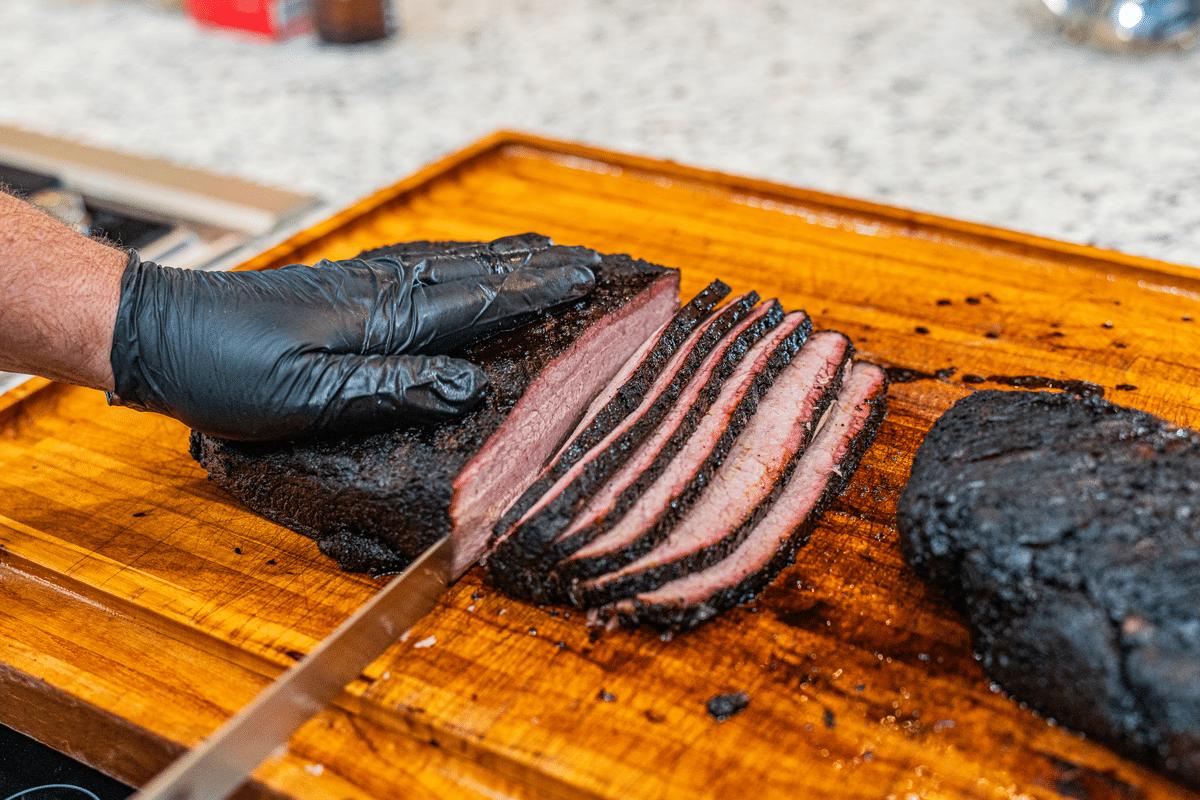
4. Creating a Bark
Bark is the dark, flavorful, highly sought-after outer crust that forms on a properly smoked Brisket:
- How To Cook The Fat-Side: Always face the fat cap toward the heat source because the best, most appealing bark develops on the exposed meat surface. Cooking fat-side down prevents the bark from forming on fat that might be trimmed off later.
- “If You’re Looking, You’re Not Cooking”: Maintain a consistent smoker temperature between 225°F and 275°F. Avoid opening the lid for the first 3-4 hours to let the heat and smoke set the bark uninterrupted.
- Spritzing & Water Pans: Placing a water pan under the grate or periodically spritzing the surface with water keeps the exterior moist, helping smoke particles stick to form a rich, dark crust.
- Wrapping: Wrap your Brisket in pink butcher paper once the bark reaches a dark mahogany color, typically at an internal temperature of 165°F to 175°F.
- Finishing & Resting: Let rest in the butcher paper until the internal temperature reaches 195°F to 205°F. Wrap in a towel and put it in an ice chest cooler for 1 to 3 hours so the juices redistribute without softening the bark.
To see Brisket smoking techniques in action from the pitmasters themselves, check out the official video tutorials from Beef Loving Texans on YouTube:
- How To Smoke Brisket with Pitmaster Jerry: https://youtu.be/QmEkrzUYr8E
- How to Make Texas BBQ Brisket with Chef Johnny: http://www.youtube.com/watch?v=dBa3Fhve5Qw
- How to Smoke Brisket (Indirect Smoking): http://www.youtube.com/watch?v=2RQxCZowDzg


