
Moroccan Beef and Sweet Potato Stew
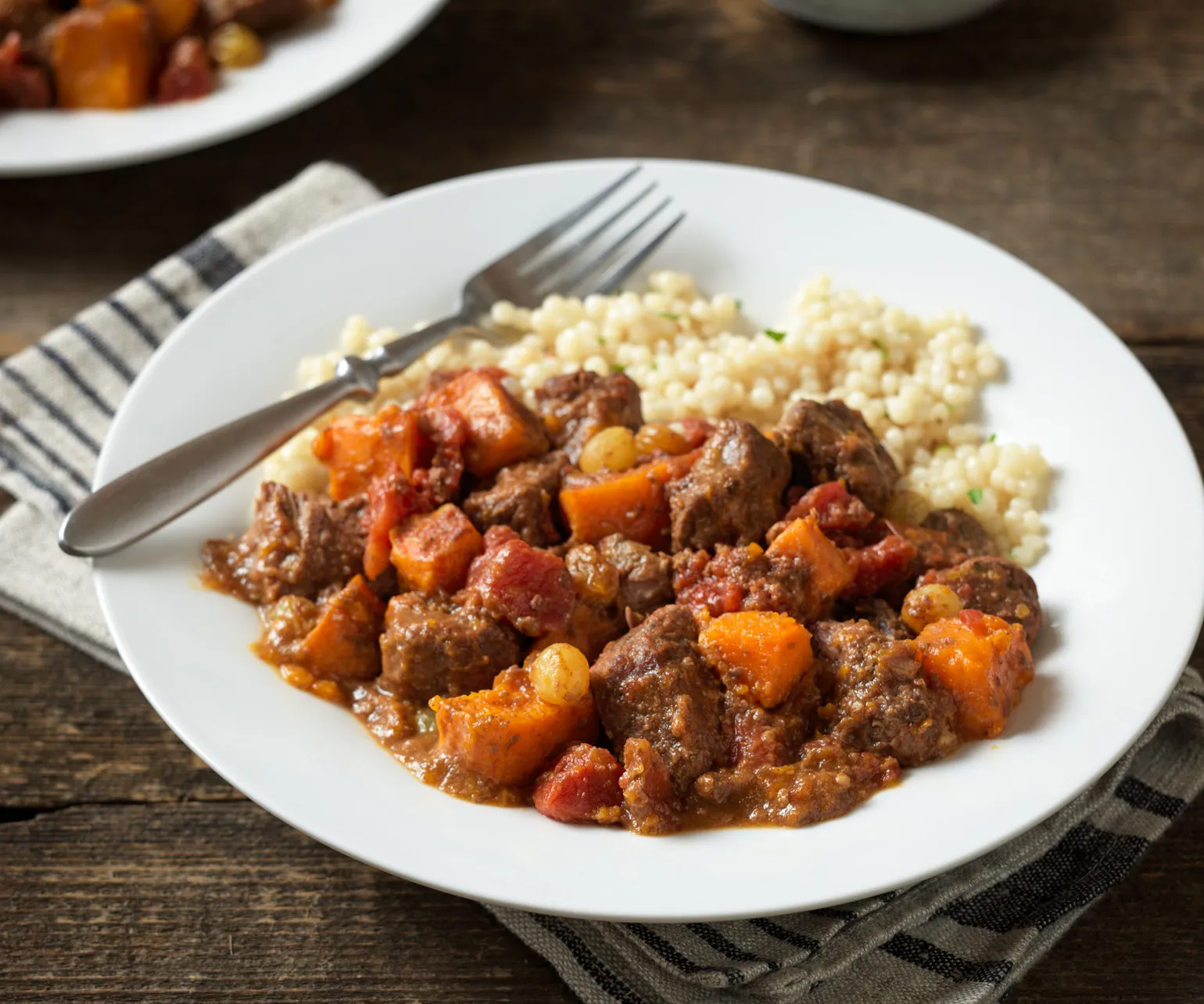
Use your slow-cooker to develop sweet and savory flavors in this Moroccan Beef Stew. It's the perfect blend of adventure and comfort.
Cook Time: 6 hrs
Servings: 6
Ingredients: 12
Ingredients
Preparation
Alternative Cooking Method:
-
Step 1
Combine flour, cumin, cinnamon, salt and red pepper in 3-1/2 to 5-1/2-quart slow cooker. Add beef Stew Meat, sweet potatoes and raisins; toss to coat evenly. Pour tomatoes on top. Cover and cook on HIGH 4 to 6 hours or on LOW 8 to 9 hours or until beef and potatoes are fork-tender. (No stirring is necessary during cooking.) Season with salt, as desired.
Cooking Tip: For smaller slow cookers, it may be easier to combine ingredients in a separate bowl before adding to slow cooker.
For early eaters, use no-salt added diced tomatoes. Using no-salt added diced tomatoes is a smart switch for anyone with this recipe – that way, each individual can add salt to preference and taste. -
Step 2
Serve over couscous. Garnish with almonds and parsley, if desired.
Cooking Tip: If you have questions about starting solids foods, consult your physician or health care provider.
-
Step 3
This recipe can be made in a 6-quart electric pressure cooker. Place beef and tomatoes in pressure cooker. Close and lock pressure cooker lid. Use beef, stew or high-pressure setting on pressure cooker; program 15 minutes on pressure cooker timer. Use quick-release feature to release pressure; carefully remove lid. Add flour, cumin, cinnamon, salt, red pepper, sweet potatoes and raisins; stir. Close and lock pressure cooker lid. Use beef, stew or high-pressure setting on pressure cooker; program 10 minutes on pressure cooker timer. Use quick-release feature to release pressure; carefully remove lid. Serve over couscous and top as desired with almonds and parsley. (This recipe variation was tested in an electric pressure cooker at high altitude. Cooking at an altitude of less than 3000 feet may require slightly less cooking time. Refer to the manufacturer’s instructions.)
Nutrition Information
412 Calories
4g SAT FAT
49g PROTEIN
5.5 mg IRON
12.1 mg ZINC
* Based on a 2,000 calorie diet
** Percent Daily Values are based on a 2,000-calorie diet
Nutrition information per serving: 412 Calories; 90 Calories from fat; 10g Total Fat (4 g Saturated Fat; 0.5 g Trans Fat; 0.7 g Polyunsaturated Fat; 5 g Monounsaturated Fat;) 140 mg Cholesterol; 745 mg Sodium; 32 g Total Carbohydrate; 4.4 g Dietary Fiber; 12.5 g Total Sugars; 49 g Protein; 0 g Added Sugars; 84 mg Calcium; 5.5 mg Iron; 935 mg Potassium; 7.1 mcg Vitamin D; 0.4 mg Riboflavin; 6.6 mg NE Niacin; 0.9 mg Vitamin B6; 3.9 mcg Vitamin B12; 377 mg Phosphorus; 12.1 mg Zinc; 70 mcg Selenium; 156.6 mg Choline.
This recipe is an excellent source of Protein, Iron, Vitamin D, Riboflavin, Niacin, Vitamin B6, Vitamin B12, Phosphorus, Zinc, Selenium, and Choline; and a good source of Dietary Fiber, and Potassium.
The Essential Ingredients
- Stew Meat: Ideal for low-and-slow cooking methods like roasting and braising. Typically cut from the round or chuck, stew meat is often diced into cubes, which make it perfect for stews, pot pie, or chili.
- Cumin: One of the most global spices, found in Mexican, Middle Eastern, and African cuisines, cumin is a warm earthy spice. It has a distinctive nutty, slightly peppery flavor and is used to flavor curries, chili, and stews.
- Golden Raisin: Fun fact: raisins are grapes! Dried grapes to be specific. Golden raisins are typically made from seedless white or green varieties, like Muscat. They’re a great, sweet addition in baking, salads, pilafs, and snack mixes.
- Diced Tomatoes: Most commonly found in a can, these tomatoes are grown and picked when ripe, then canned in their own juices. They are a convenient pantry staple that can be added to many dishes.
- Almonds: A nutrient-dense tree nut with a sweet flavor and crunchy texture. These nuts are used in both sweet and savory dishes, and can be eaten raw, roasted, toasted and more.
Safe Handling Tips:
- Wash hands with soap and water before cooking and always after touching raw meat.
- Separate raw meat from other foods.
- Wash all cutting boards, utensils, and dishes after touching raw meat.
- Do not reuse marinades used on raw foods.
- Wash all produce prior to use.
- Cook steaks and roasts until temperature reaches 145°F for medium rare, as measured by a meat thermometer, allowing to rest for three minutes.
- Cook Ground Beef to 160°F as measured by a meat thermometer.
- Refrigerate leftovers promptly.
For more information on degree of doneness and other cooking tips.
For more information on safe food handling and beef safety.
Frequently Asked Questions
-
What cut of beef is stew meat?
Typically stew meat comes from chuck (shoulder) area. It’s great for slow cooking or use in stews or chili’s.
-
Why do you coat the stew meat in flour?
Flouring the beef helps thicken the juices. If you are gluten intolerant, you use a cornstarch slurry instead.
-
Can I serve this over rice instead of couscous?
Absolutely! This dish goes great with long grain rice, like basmati or potatoes.
-
What do I do if my stew is too thick?
If your stew has thickened too much, add more beef broth or water until desired consistency.
Related Recipes




Browse Recipes by Category
Sign Up or Log In to Share Your Beef-Loving Review!
Join the herd — log in to add your voice!
 Google
The recipes are always amazing and fairly easy to make. I especially like when alternatives are provided for items and suggestions for cooking such as: for a small crockpot mix ingredients together in a separate bowl adding to the crockpot.